Understand what a real Google Business Profile, an HVAC contractor website and a separate information Market each do—and how customers move between them.
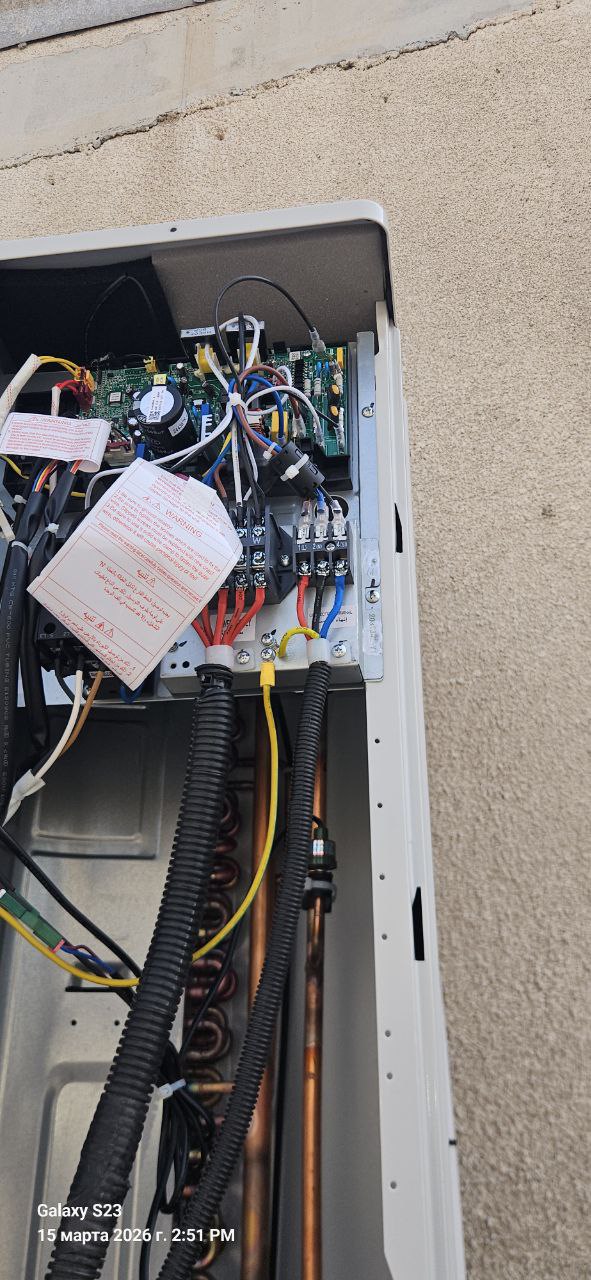
Outdoor HVAC equipment opened for inspection. DENAIR HVAC work, Dubai, UAE.
A homeowner with a broken air conditioner may search on Google Maps, read a contractor's service page or encounter an industry information page before making contact. Those are different experiences. Treating them as one interchangeable “SEO channel” makes the marketing plan harder to operate and the results harder to measure.
The simplest model is this: Maps helps people discover a real local business; the contractor website helps them evaluate and contact it; a separate Market provides useful subject information and can direct interested visitors toward an appropriate service provider. None replaces the other two.
Three surfaces, three tasks
Surface | Visitor question | Owner responsibility | A useful measurement |
|---|---|---|---|
Google Business Profile / Maps | Is there a suitable real business in reach? | Accurate name, category, service area, hours and contact details | Profile interactions, interpreted in context |
HVAC contractor website | Can this team handle my equipment and location? | Truthful service details, evidence, accessible contact route | Qualified enquiries and bookings where tracked |
Independent Market + Pages | What does this service involve and which provider fits? | Useful editorial content and transparent navigation to a real business | Relevant discovery and onward interest |
A useful journey might start with an explanation of a mini-split problem in a Market, then continue to the local contractor's own page where service boundaries and enquiry options are clear. Another person may bypass informational pages and contact the business directly through Maps. Both are legitimate; neither journey can be assumed from impressions alone.
Google Maps is not an adjustable territory contract
Google says local rankings mainly depend on relevance, distance and prominence. An agency cannot buy a preferred location in Maps or remove the distance factor by publishing a network of city pages. The underlying Business Profile should represent the actual eligible HVAC company. A service-area contractor typically needs a real profile associated with a legitimate base—not a separate fictional office for each area it serves.
Contractual geographic exclusivity for a marketing programme is a business agreement. It is not a Google ranking privilege. Owners evaluating any provider should insist that these concepts stay separate.
The contractor website remains the place for company-specific proof
Industry explanations are useful, but customers still need to know whether a named team repairs their equipment, serves their neighborhood and offers a workable next step. An authentic service page can include real project photographs, the correct service-area boundaries and a visible phone or request form. A Market should not copy that page wholesale or imply it is the contractor's legal website.
For the website operator, this division also helps measure the path to a sale. An information-page view is not a qualified lead. A Maps interaction is not automatically a booked job. A confirmed booking is not the same as a completed paid service call.
When information conflicts, trust falls
Suppose the website says a company serves one city, its Business Profile lists a larger area, and its contact form sends callers to the wrong branch. Publishing additional articles will not resolve that operational discrepancy. The first task is to align the real business information across surfaces and confirm how leads are routed.
The strongest configuration is not “be everywhere.” It is to give each surface one clear responsibility and let the user move between them without contradictory claims.
See How It Works for the 1000&1 operating model. For a concrete consistency check, see Why Your HVAC Website and Google Business Profile Must Agree.
Sources and scope
Google Business Profile: Guidelines for representing your business
Google Search Central: Helpful, reliable, people-first content
The paths described are illustrative user journeys, not measured traffic attribution. A Market does not guarantee Google visibility or calls.

About the author
Co-Founder and CTO at 1000&1, focused on software architecture, market intelligence, data workflows and search-driven website growth.